

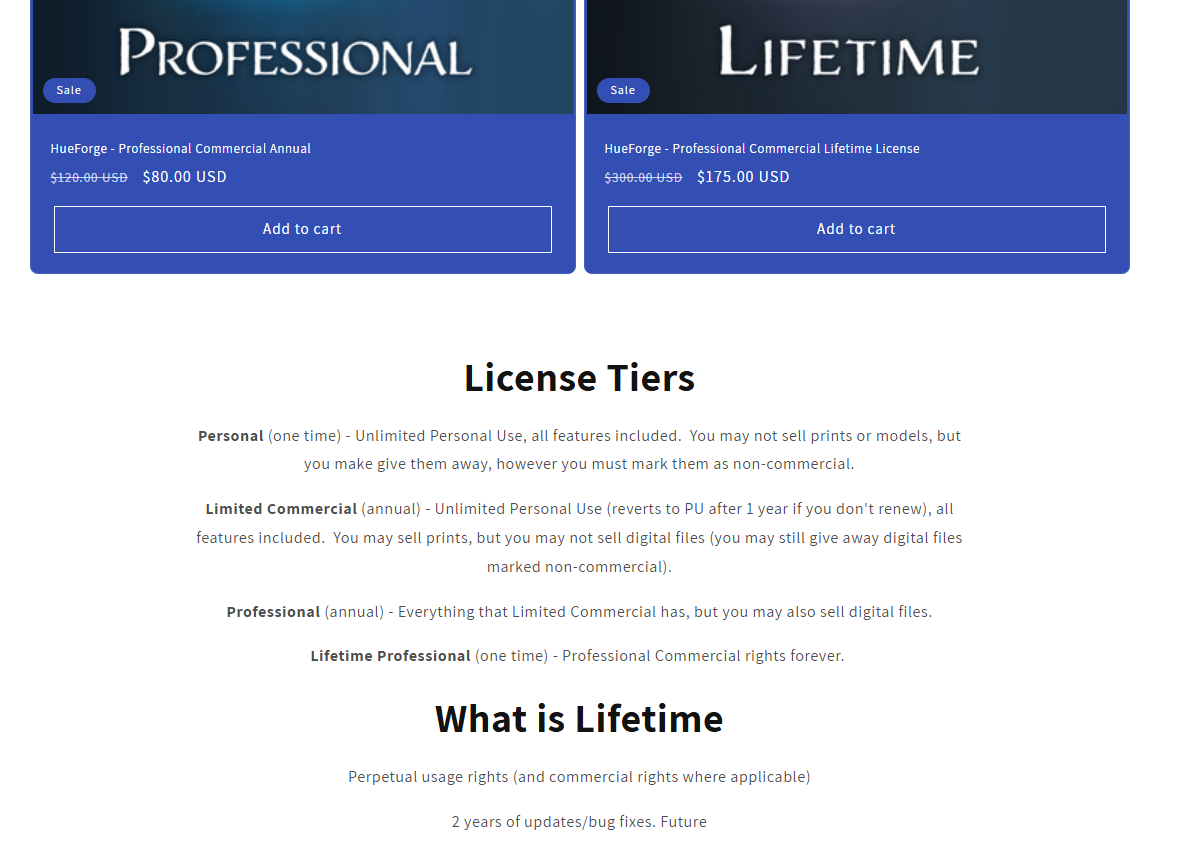
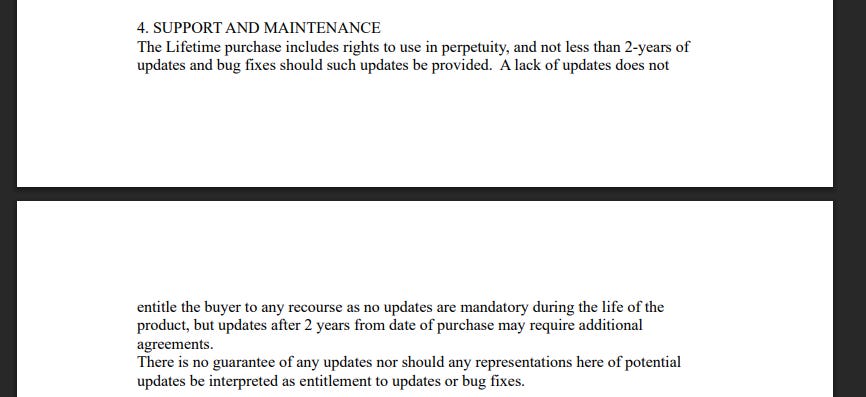
HueForge Lifetime Licenses are Lifetime Usage (and if you have Lifetime Professional, commercial rights as well) and 2 years of guaranteed updates. This has been the case since literally before day one.
The only thing that has changed between then and now is that I finally can give users access to download their last released version that was under their maintenance window if they decide not to pay for updates. This was a requirement for me before I could turn on paid updates. Now that it exists, the always planned maintenance fees were also possible.
Also, you do not need to pay any maintenance fees now to get all versions in the 0.9.4.x family. They are included regardless of when your expiration date is.
I guess I should start at the beginning:
The Beginning
In the first half of 2023 I realized that HueForge was something that was more than a personal hobby project. It also moved from being primarily about color lithophanes to being about front-lit filament paintings.
I posted on this devlog asking about what people wanted for pricing HERE
I got a resounding NO on monthly subscription plans. That was fine with me, I hate them too (still true). So I posted this update about 4 days later HERE in it, I outlined fixed pricing with 2 annual commercial plans and two lifetime plans. At some point shortly after posting this, I got the feedback from multiple people that I should build in a maintenance window for updates, so I updated that article agreeing and specifying that I would do that. Maintenance would be guaranteed for 2 years after that an optional fee would allow more updates. At the time, I struggled with what a fair fee would be, I had no idea how to actually implement it on my store and it seemed like a problem that was very far off.
The Wayback Machine has a capture of the Buy HueForge page from July 5th 2023 that shows my definition of Lifetime (HueForge went on sale June 16th 2023 and the first Wayback capture is June 28th 2023).
The very first EULA has these terms in it:

This is not a pivot - not a degradation of the initial intent. We are not on a slippery slope to monthly payments. (Full disclosure, I have an entirely optional monthly Professional License on Thangs as an old experiment with them. A few people have availed themselves of it, but I never recommend it and repeatedly consider discontinuing it.) This is always as intended from before release until today. The only difference is I’m actually enforcing it now because I have built the infrastructure to do so.
The EULA has updated only once since release and that update increased rights for those with annual commercial licenses. Their products created under license would remain saleable in perpetuity, regardless of whether their license was now expired or not. The only requirement being they were disclosed within a month of their license expiration. It also explicitly excluded certain content from being considered “commercial use” of HueForge. Again, to the benefit of HueForge consumers.
Why Maintenance Updates?
Around the time I was releasing, a few notable lifetime license products had been required to go back on their word and start charging for updates they had promised never to charge for. Why? Because software development is work. It takes time and effort and the possible user base is not infinite. It is important to bake in some form or long term income to avoid similar issues.
Like everything else I’ve done for HueForge licensing, I tried to make this as customer friendly as possible. There is no requirement that you “keep up” with the updates. If you decide you don’t care about the updates or just aren’t using HueForge for awhile and decide to jump back in, you will have the option to pay as little as $12 and get the current, up-to-date version, to use (plus the next 12 months as well). Or if you prefer not to pay, you can still download the last version that was supported under your maintenance period even if you didn’t download it earlier (which is set for everyone to be the latest 0.9.4.x release regardless of their actual expiration date). Paid plugins also provide ongoing income and since they do help with that, first-party paid plugins provide 6 months of additional maintenance updates as well.
I’d also briefly considered other models. The “major version” model is probably the most common in software. Upgrades within version 1.x are all included, but the moment the company releases 2.x you have to pay again. Think Photoshop before Creative Cloud etc. The problem with this is that there often isn’t any kind of obvious cutoff between versions. So the difference between version 1 and version 2 is that the developer decided they wanted to get paid again. They hold off updates that could go into version 1 and put them into version 2 in order to induce buyers to pay for the upgrade. People who buy just before the announcement get screwed.
The maintenance updates model means that if you just bought, you get the next 2 years, you never have updates that don’t get to you in that period. If you bought 2+ years ago, you’ve gotten all the updates up until then and can then make a choice whether the new updates are worth it for you or not. To me, this seems the fairer version.
The Goal is Always to be Fair to the Customer
I know that many companies out there are looking for ways to nickel and dime their customers as much as possible. Constant subscription cost updates, pushes to upsell your version repeatedly. My goal is never to do that. At the same time I need to support myself and my family over the long haul. Inexpensive, optional maintenance fees seem like the right way to do this.
I’m not sure a lot of people realize, but HueForge ships entirely unkeyed. It is not locked to your account, it is in fact a Household license - you may run it on every computer you own or are the sole user of. Windows/Linux/MacOS - all versions are available under the single purchase. I regularly get questions about how to uninstall from one machine and put it onto another machine so it will work. The answer is, just install it on the second machine and if you are not using the old machine anymore - delete it there.
This does have tradeoffs. Without a license key, I cannot provide automatic updates inside of HueForge, because I cannot validate your license there. So the next best option was creating a one-stop download page to make updating easy (and a Windows installer). But a license key can also kill your software if the license server isn’t up. If I ever go out of business, this could cutoff your access to the software you bought. A lot of what we consider modern software conveniences are actually built around consumer restrictions. Steam can auto update your games because you are logged in and they can validate your license (and they allow offline play for a period of time as well) this lead to the first system that allowed you to install your games on multiple computers which was a massive benefit to users but is built on a rather large amount of infrastructure that was built by Valve and the ability to validate who you are. Similarly Autodesk can update Fusion for the same reason, but you must be logged in to even use Fusion.
Are Monthly Fees Coming?
No. I don’t even automatically charge for annual subscriptions at the end of the year. I have app vendors wanting me to try their subscription services, but I just don’t like them. A discounted annual license with an auto-renew is something I might consider (most people forget their license has expired and don’t renew it even though they intended to), but never at the expense of the single purchase version without any kind of auto-renew.
Like you, I hate the proliferation of subscription-only software. HueForge software is and will remain (so long as I’m the one in charge) a one-time fee for lifetime usage. If years after your purchase you would like more updates? You can decide then whether to pay the maintenance fee for those. Otherwise, you can keep using the version you have for as long as you would like to, I couldn’t stop you even if I wanted to - I built HueForge the way I did to make sure of that.